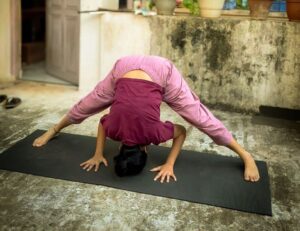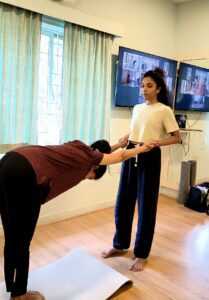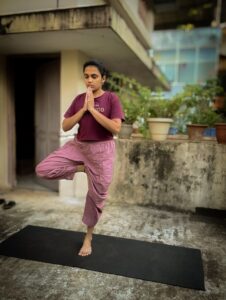
As someone with PMDD, anxiety, trichotillomania, dermatillomania, and OCD, I have tried various techniques to manage anxiety over the years. My background in psychology helped me understand the workings of the mind — but it also made me realise that anxiety is not just in the mind. It is very much stored in the body.
The Science: How Emotions Live in the Body
A landmark research paper — Bodily Maps of Emotions by Nummenmaa et al. (2014), published in the Proceedings of the National Academy of Sciences — helped me understand this deeply. The researchers found that emotions are represented in the body as topographically distinct physical sensations, consistent across individuals and cultures.
Rather than being purely mental, emotions involve the activation of biological systems including the cardiovascular, skeletomuscular, and autonomic nervous system. Key findings from the study:
- Somatotopic Maps: For every emotion, there is a specific, predictable pattern of bodily activity — a physical “signature.”
- Bodily Sensation Maps (BSMs): Anger and fear show increased sensations in the upper chest. Happiness uniquely triggers enhanced sensations all over the body.
- Cultural Universality: These maps are biologically based — not culturally learned. Participants from Finland, Sweden, and Taiwan reported nearly identical bodily sensations for the same emotions.
- Functional Role: These sensations help us fine-tune behaviour in response to our environment — and help us empathise with others by mirroring their physical states.
In short: emotions are stored in the body as universal, categorical patterns of physical activity that the brain interprets to create our subjective feelings.
Having this knowledge made something clear — I needed to work on my body, not just my mind.
Finding Atma Yoga Shala
Being Indian and growing up in an environment where yoga was part of everyday life, I naturally turned to yoga. But I wanted something specific — a teacher with a background in psychology who truly understood the mind-body connection. That’s when I found Joshna, founder of Atma Yoga Shala, Chennai.
I decided to join her Teacher Training Course (TTC).
Before joining, I had only heard of Hatha Yoga and Ashtanga Yoga. Joshna introduced me to something new — or rather, something very ancient — called Vinyasa Krama. I was sceptical. I didn’t want to become a yoga “teacher.” I wanted to heal my anxiety, stop picking my hair and skin, and find some peace. And Vinyasa Krama wasn’t exactly a household name like hot yoga or face yoga.
But my gut said: Aparna, go for it. Don’t analyse too much.
And that’s exactly what I did.
Continue reading: Part 2 — What Vinyasa Krama Actually Is (And Why It Is Different) →