This is Part 2 of Aparna’s journey through the Atma Yoga Shala Teacher Training Course. Read Part 1 here.
The Onboarding — and the People Who Would Change Everything
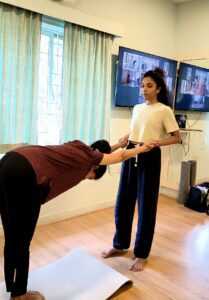
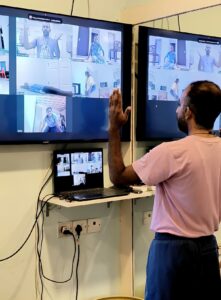
The excitement began with our onboarding call, where I met my fellow students — people who later became genuine friends. We were thoroughly introduced to the program structure, timings, what we would be learning, and what was expected of us.
I also met the teachers I would come to deeply look up to: Aravind, Indra, Joshna, and Anupama Ma’am.
The full curriculum covered:
- Asanas
- Pranayama techniques
- Yoga philosophy
- In-depth study of important yogic scriptures
- Vedic chanting
- Anatomy and physiology
- Yoga with props
- Food and lifestyle
- Yoga Nidra
- Concepts like chakras, koshas, bandhas, karma, and more
The First Class — and a Gentle Correction
In my very first class, I pronounced Vinyasa Krama as “Vinyasa Karma.” Aravind gently corrected me — it is Vinyasa Krama. Vi meaning variation, nyāsa meaning within prescribed parameters.
He explained the four parameters from the Yoga Sūtras of Patañjali that guide all asana practice — from a simple standing posture to a headstand:
- Sthiram — Steadiness
- Sukham — Comfort
- Prayatna Śaithilya — Long and smooth breathing
- Ananta Samāpatti — Mind absorbed in the breath
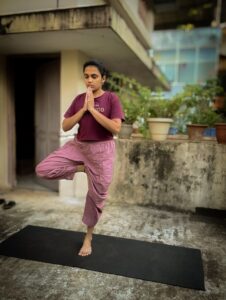
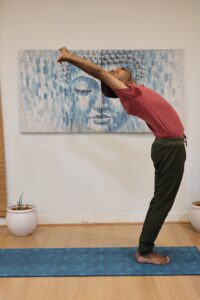
We then learned Samastithi — equal stance. Standing with feet together, thighs touching, hands by the sides, chin slightly tucked, gaze fixed at a point. Simple enough. But standing there, I noticed my body swaying — left, right, forward, back — just like my mind.
Then we were asked to focus on Ujjayi breathing. The more I gave my full attention to the breath, the less my mind wandered — and almost immediately, my body became steadier. A lived example of the mind-body connection.
More Than Asanas
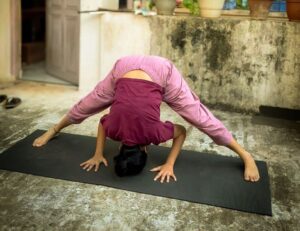
As classes progressed, we went from Samastithi all the way to headstand. Along the way, the TTC dismantled one of my biggest limiting beliefs: “Yoga isn’t enough — you need the gym to build real strength.”
Many of the asanas were more demanding than my gym workouts. The addition of conscious breath made them even more effective — increasing oxygen efficiency, aiding muscle recovery, and quieting the mind. When asana is done with breath, the body moves from concert mode (noisy) to library mode (quiet). Sleep improved. Anxiety eased. Psychosomatics in action.
But the TTC was never just about asanas. Because yoga ≠ asana.
Yoga Sūtras — A 2,000-Year-Old Manual for the Mind
Anupama Ma’am taught us the Yoga Sūtras of Patañjali — 196 aphorisms written approximately 2,000 years ago, the vast majority of which are about the mind. Only 4–8 verses are dedicated to asana practice.
What struck me deeply: what modern psychology articulates today was already present in our scriptures thousands of years ago. The eight limbs of yoga, the obstacles of the mind, the sources of human suffering, the concept of practice and detachment — a complete system, ancient and remarkably precise.
Anupama Ma’am explained each word, its hidden meaning, its interpretation, and its real-life application. Teaching in the true guru-shishya tradition — and I could not have asked for a better guide.
Anatomy, Physiology, and Props
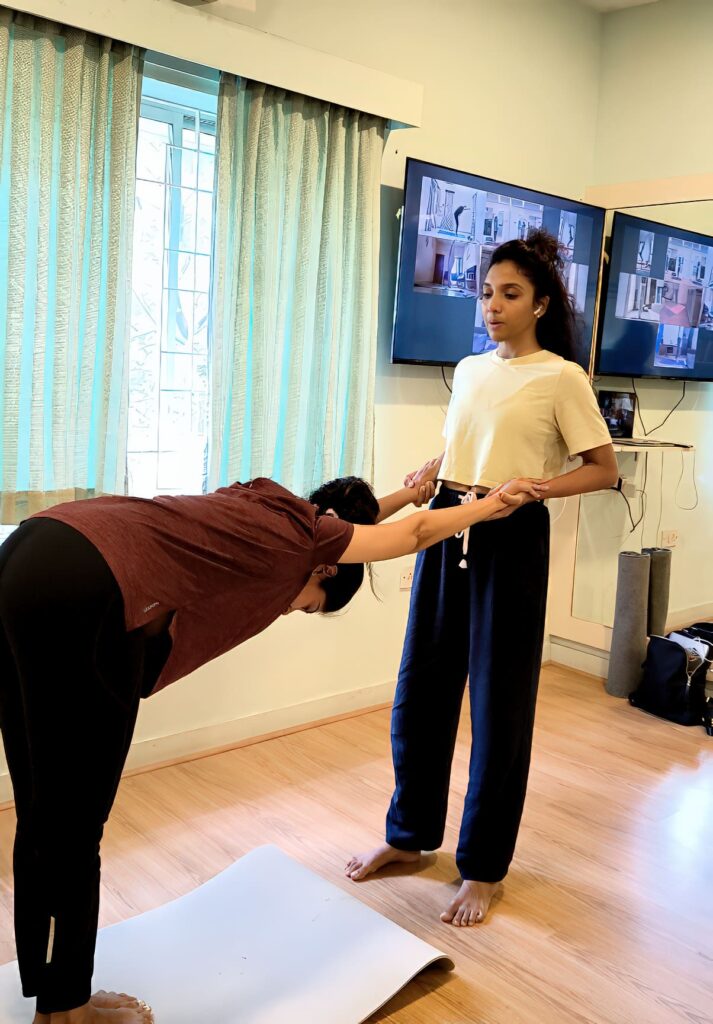
One of the most distinctive aspects of this program is its depth of training in anatomy and physiology. It is genuinely rare to find yoga teachers with this level of knowledge. Joshna is one of them — she consistently integrates her understanding of organ systems, contraindications, and adaptive modifications into every asana class.
The program also covered the use of props — blocks, cushions, chairs, walls — and how to adapt postures for students with specific challenges like tight hamstrings or spinal issues. This draws from the Iyengar tradition, and it was taught with real care and depth.
Vedic Chanting — An Unexpected Delight
Vedic chanting classes were among the most enjoyable of the entire program. We learned how to pronounce Sanskrit alphabets and chant important mantras and ślokas. Beyond the beauty of it, chanting helped calm my mind and heightened my awareness of bodily sensations.
I also noticed something unexpected — my voice changed throughout my menstrual cycle. I later learned this is a documented phenomenon. To have experienced it firsthand, without even knowing it existed, was quietly astonishing.
How the TTC Helped Me Heal
The program is six months long — not a two-month crash course. That duration matters. Real learning takes time. Here is what genuinely shifted for me:
Breaking limiting beliefs through the body. Joshna regularly asked us to stay in difficult postures even when the mind screamed to stop. When we held on and got through what the mind said was impossible, the limiting belief shattered — and slowly, that translated into real life as well.
PMDD reduced. Paścimottānāsana appears in somatic intelligence literature as beneficial for PMS. From personal experience, consistent yoga practice — not just asanas, but the full system — helped reduce my PMDD symptoms considerably.
Seeing more clearly. This is hard to explain. One of those things where, if you know, you know.
Interoception and proprioception. Thanks to anatomy training, I can now identify exactly what part of my body is engaged, where I feel discomfort, and what specific movement it needs — not just during practice, but sitting at my desk through a long workday.
Yoga Nidra and the subconscious mind. We were taught Yoga Nidra in a holistic, grounded way — its purpose, application, and benefits. It was then I understood why it works: it speaks directly to the subconscious. Ancient texts understood what modern neuroscience is only beginning to confirm.
Final Thoughts
The entire program helped me understand myself better — as a person and as a body. It left me with a realisation I carry with me:
“We perceive reality as we are, not as it is.”
If you are looking to improve your mindset, understand your body, or train as a yoga teacher and help others transform — connect with Atma Yoga Shala. The passion and commitment you will find there is genuinely rare.
— Aparna Viswanathan, TTC Graduate, Atma Yoga Shala
Continue reading: Part 3 — How Yoga Teacher Training Healed My Anxiety →